
Fountain Hills Roofers
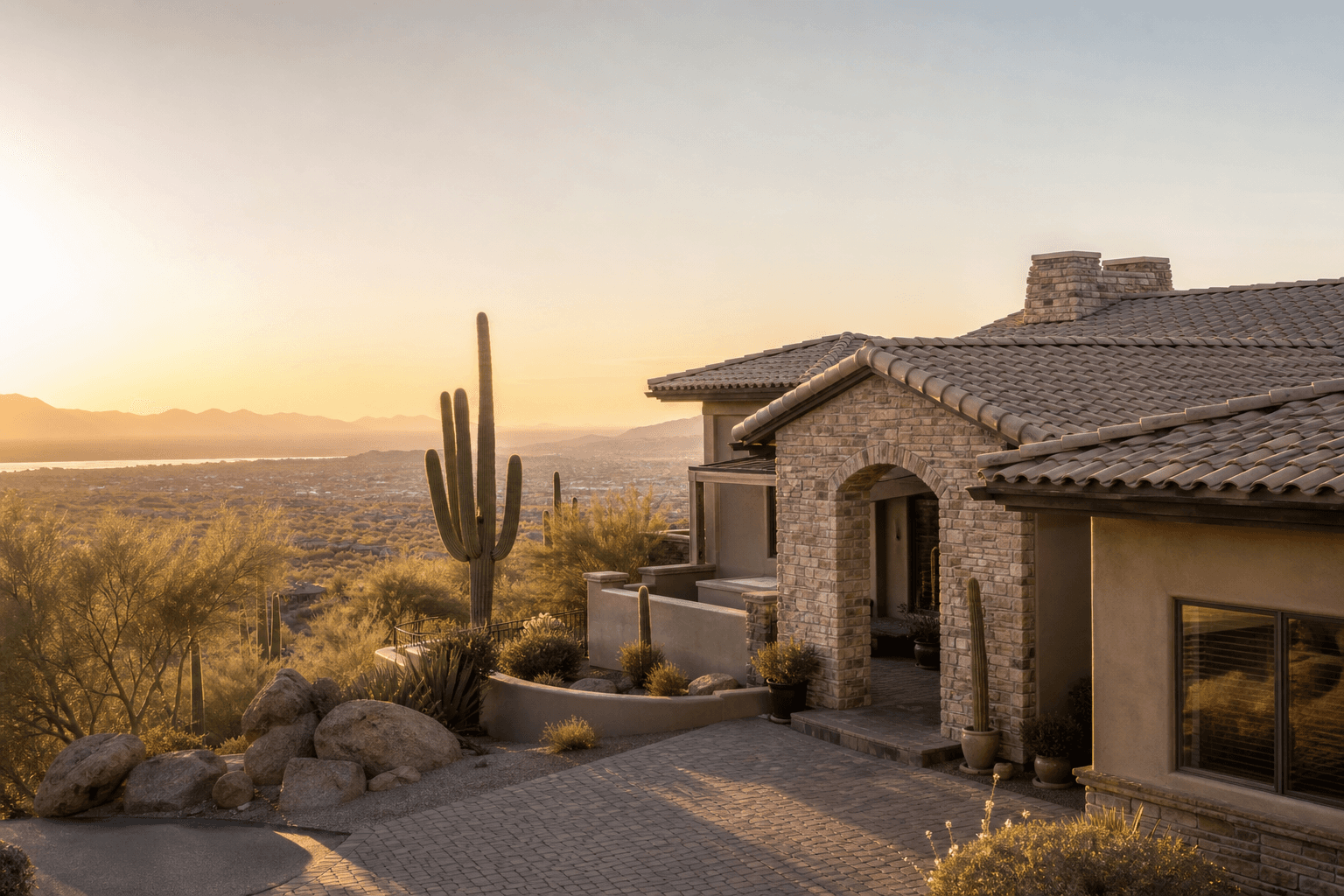
Engineered for the elevation.
Fountain Hills' specialist roofers for ridge, hillside, and elevation-exposed homes. Written specifications, wind-uplift detailing, senior estimator oversight, and documentation on every layer.
The Specification
Built for wind, UV, and the lot under the roof.
Ridge tiles, foam roof perimeters, bird stops, penetrations, and edge metal are where Fountain Hills roofs reveal whether the installer understood the exposure.
25-35
Years targeted for synthetic underlayment service life
4-6
Year foam roof recoat planning cycle
Why Elevation Matters
A Fountain Hills roof needs more than a manufacturer-minimum install.

The town sits above the Salt River Valley, and that elevation changes the wind picture. Microbursts can accelerate over Fountain Hills ridgelines and strike windward elevations in Firerock, SunRidge Canyon, Eagle Mountain, Adero Canyon, and Crestview.
Standard ridge tile installation, foam perimeters, bird stops, edge metal, and penetration flashing need to be detailed for the actual exposure. The fix is specification, not upsell.
What We Install
Roof systems matched to Fountain Hills architecture.
Tile Roofing
Concrete and clay tile roofs for Pueblo Revival, Territorial, and contemporary desert homes.
Read the spec →Foam Roofing
Foam roof systems for flat and low-slope roof sections common across Fountain Hills architecture.
Read the spec →Metal Roofing
Standing seam metal for contemporary remodels and new builds in ridge and hillside neighborhoods.
Read the spec →Shingle Roofing
Architecturally appropriate shingle systems for select older homes, rear elevations, and accessory structures.
Read the spec →Elevation Detailing
Ridge, hillside, and high-elevation roof detailing for wind uplift and monsoon exposure.
Read the spec →Roof Repair
Targeted repairs for tile, foam, flashing, valleys, bird stops, and roof penetrations.
Read the spec →Neighborhoods
The neighborhoods we work in.
Fountain Hills is not one roof condition. Eagle Mountain, Firerock, SunRidge Canyon, Adero Canyon, Crestview, and the original town core each bring different architecture, wind exposure, and approval paths.
Fountain Hills
Town-wide roofing for custom and semi-custom homes across the high desert east of Scottsdale.
Eagle Mountain
Golf community and hillside homes where tile profiles, foam sections, and ridge exposure need careful specification.
Firerock
Ridge and hillside custom homes with HOA architectural review, high-end tile profiles, and meaningful monsoon exposure.
SunRidge Canyon
Hillside and golf-course homes with contemporary and desert architecture exposed to wind and thermal cycling.
Adero Canyon
Premium hillside properties where roof geometry, drainage, and wind-uplift detailing should be defined before scope.
Crestview
Elevated custom homes where valley views often come with exposed roof edges, ridges, and drainage details.
Fountain Hills Town Center
Original master-planned core properties, professional buildings, and nearby homes with mixed roof assemblies.
Fort McDowell
Border-area properties served by appointment, with the same written specification and documented inspection process.
The Pinnacle Process
Specification before scope. Documentation on every layer.
01
Document the Existing Roof
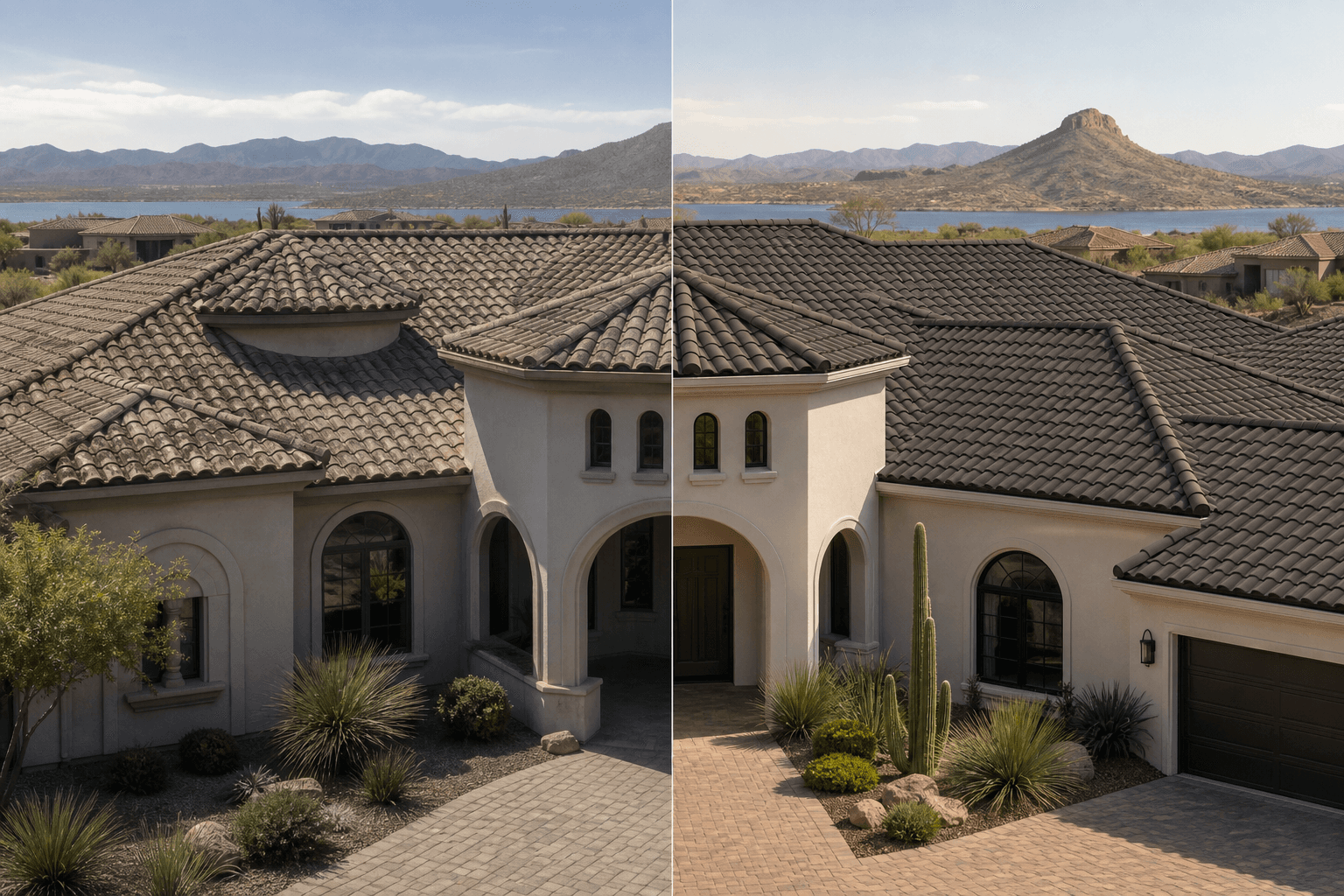
A senior estimator records tile profile, underlayment condition, flashing, penetrations, ridge attachment, foam perimeters, drainage, and visible failure paths.
02
Walk the Elevation Exposure
We evaluate ridge, saddle, hillside, windward, and perimeter conditions so the roof specification matches the lot, not just the product brochure.
03
Write the Specification
The scope identifies materials, fastening, underlayment, flashing, recoat or rebuild recommendations, and documentation expectations before crews arrive.
04
Install and Photograph Every Layer
The homeowner receives the file: underlayment, flashing, ridge work, penetrations, edge conditions, and finished roof documented for future ownership.
Common Questions
The questions serious homeowners ask before they choose a roofer.
Do I need a permit to replace my roof in Fountain Hills?
Yes. The Town of Fountain Hills requires a building permit for full reroofs and most structural roof repairs. Visible roof material, color, and slope may be subject to architectural review depending on your neighborhood's HOA. We pull the permit on your behalf, coordinate inspections, and provide closed-permit documentation when the work is complete.
My HOA in Firerock or SunRidge Canyon requires architectural review. Do you handle that?
Yes. Most Fountain Hills HOAs require submission of the proposed tile profile, color, and sometimes the underlayment system before work begins. We prepare the architectural submission package and coordinate approvals before scheduling the install.
How long should a tile roof actually last in Fountain Hills?
The tile itself will usually outlast the structure. The underlayment beneath is the consumable component. With a properly specified synthetic high-temperature underlayment, expect 25-35 years before reinstallation.
My foam roof is 7 years old and looks chalky. Recoat or replace?
Almost always a recoat if the foam itself is intact. A proper recoat every 4-6 years is part of normal foam roof ownership and can extend the system's life by decades.
What does monsoon damage look like on a Fountain Hills ridge property?
On ridge or saddle elevations, wind uplift is often the dominant failure mode: lifted ridge tiles, displaced bird stops, peeled foam roof perimeters, and water intrusion at penetrations.
Will my homeowner's insurance cover a roof replacement?
It depends on the cause and the policy. Storm damage is typically covered; gradual UV degradation is not. We document storm-related damage thoroughly and never inflate scope to manufacture a claim.
What's the difference between a roof inspection and an estimate?
An estimate is a sales document. An inspection is a written, photographic record of the current condition of every component on your roof.
Schedule
Have a senior estimator walk the roof and the elevation.
We document the condition, explain the specification, and put the scope in writing before you make a decision.